


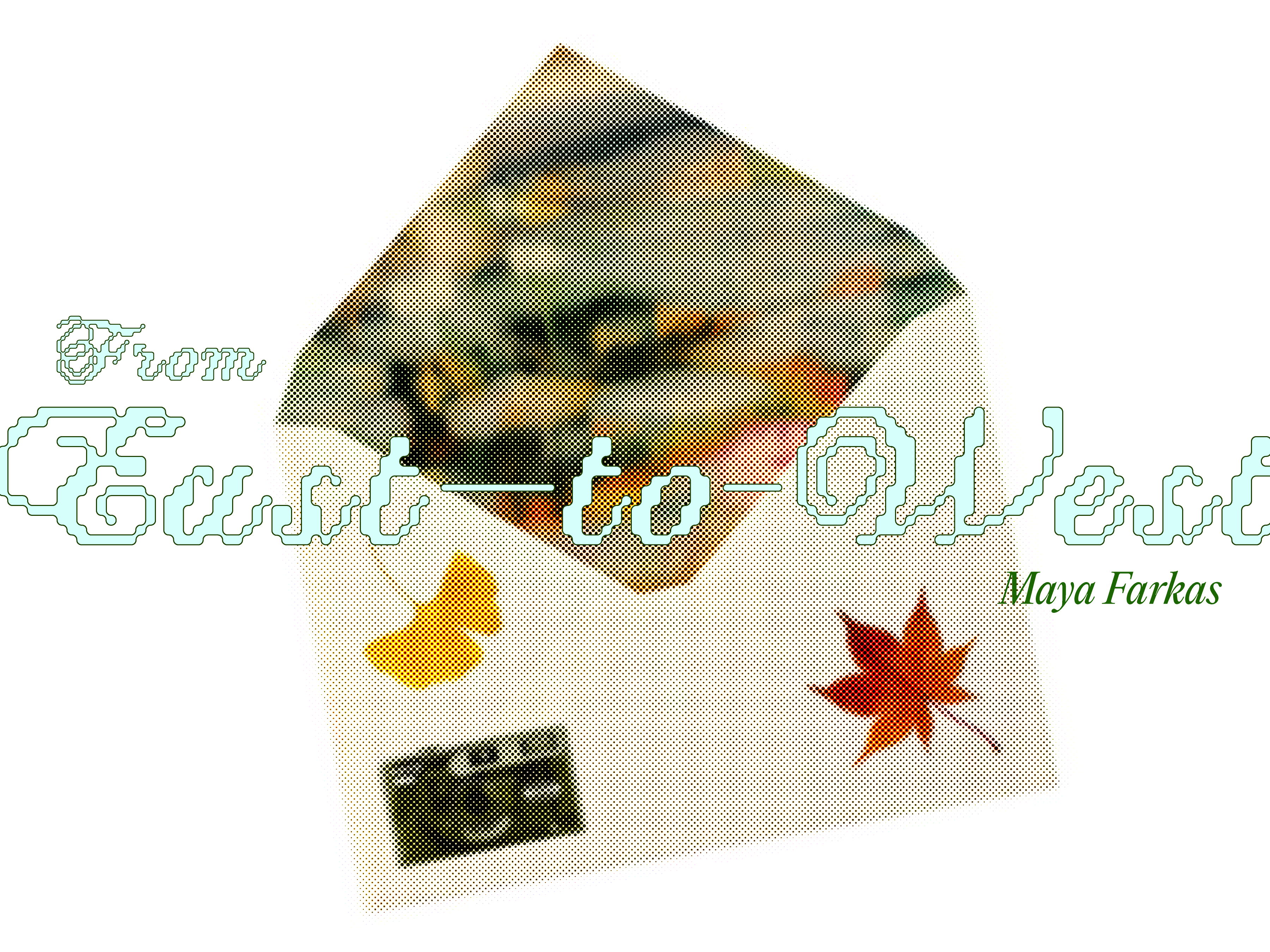
The second time I met Julia was the summer of 2016 in Toronto, I was 9, and she was 25.
Having just flown in from China, my family was jet-lagged and needed to rest, so we stayed at my aunt’s house. It was a gigantic suburban house with three floors, a basement, and a garage. Although having already moved out, the childhood photos around the shelves were evidence that this was once home to my cousin Julia. I looked out the second-floor window and saw nothing but more houses. For a city girl who grew up in Beijing, I could not imagine the way she grew up. As we followed my aunt around the city the next day, visiting grocery shops, parks, and malls, all I could think of was how big everything was, and, of course, the lack of Asian people around.
Later that day, we had dinner with Julia after she came back from work. She talked about the day she had dealt with her last client. The last time I saw her was a year before, in Beijing. After graduating from college, Julia travelled the world and stayed in my home while passing through China. I always admired her as a kid, every time my parents told me a cool story of her journey, I thought to myself: This is what I want to become when I grow up. She was always carrying around her large camera and took pictures of my brother and me while we were walking down the street. On that trip, I tried to teach her Mandarin, starting with the four tones and progressing into words such as māo (cat) and góu (dog). My brother and I even gave her homework assignments to complete and send back to us via email. I talked a lot to Julia since we both love photography; I would show her the pictures that I took for class, which she liked a lot.
But back in the restaurant, I noticed that Julia was no longer carrying her large camera. Without it, she seemed more grounded than the last time I had seen her, as if she had settled into herself. Watching the way she laughed, spoke, and joked, I began to understand how a place can shape a person. Though she was part Asian, everything about her felt deeply rooted in Toronto, as if that was where she truly belonged. I thought to myself: How are we so different?
Even at that age, I knew in my heart I was a Chinese girl. I grew up in a city shaped by small, ordinary freedoms, weekends spent wandering wet markets with my grandparents, friends’ houses close enough to reach on foot, and nights when I felt safe moving through the streets without my parents by my side. I had all the reserved mannerisms that a Chinese girl would have. I was shy, quiet, and didn’t really know how to talk to people. Much different from Julia, who could start a conversation with almost anyone.
Years later, when I went back to Hong Kong, the place where my dad and his sister, Julia’s mother, grew up. On my grandma’s desk, I saw a picture of my dad and my aunt together with my grandpa. My aunt looked much more Asian in this picture, seated next to my grandpa, compared to how she looks now. For a moment, I wondered whether decades of living in Canada had softened that part of her identity. But studying the photo more closely, I realized what truly connected Julia and me: both of our parents grew up navigating a culturally layered world, balancing their identities as both Korean and American. I recalled the stories my dad told me about growing up in this city built upward, where generations had lived close enough for memories to overlap.
In the end, my grandma was the real hero, one who made all of this happen. She was a little Korean lady who escaped mainland China during WWI and came to British-colonized Hong Kong by herself, where she met my grandpa and built a life in Causeway Bay for her and her children. I have heard numerous tales of the adventures and difficult times my grandma has been through to achieve what she has today. As a teenager going into Hong Kong, she made the best of it and worked as a flight attendant, got into prestigious country clubs when they only accepted white people, and even started a fashion brand. And to think, 60 years later, her grandkids are chasing their own dreams across the world. Julia and I are both products of what my grandmother devoted her life to, we carry the legacy of her lineage into the twenty-first century. Though we come from different backgrounds and live in vastly different ways, we are connected by the same formidable woman who made all of this possible.
So, to the young girl sitting in that restaurant, convinced she was worlds apart from her cousin, she was mistaken. In the end, they were shaped by the same roots, bound by the same history, and moving forward along parallel paths. We are different in direction, but never truly separate.
